Churchtown South and Ballycatoo
Ballintemple-Area Place References in East Cork
Introduction
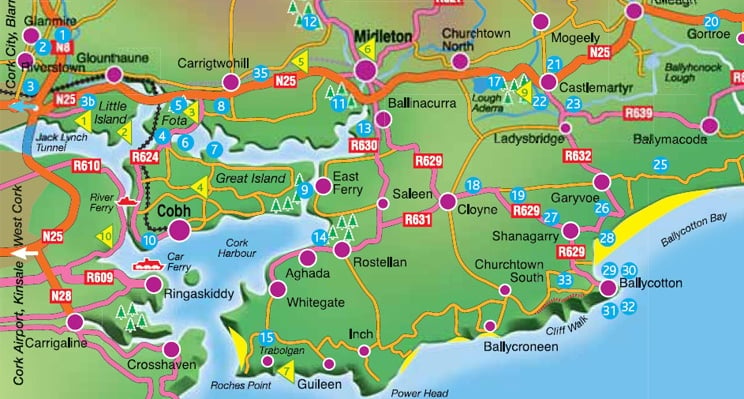
Churchtown South and Ballycatoo are important reference points in the wider Ballintemple-area landscape surrounding Carrigkilter and Ballybraher. Their value to the Dorgan / Dargan research comes from parish geography, nearby roads and farms, neighboring families, and records that connect the Carrigkilter family with this part of East Cork.
Churchtown South has a particularly important documented connection to the family. On 10 July 1866, Mary Dorgan, daughter of Patrick Dorgan, married Jeremiah Healy at the Roman Catholic Chapel of Churchtown. Mary was then residing at Ballybraher. The civil marriage record names her father as Patt Dorgan, farmer, and the witnesses were Michael Dorgan and Daniel Dorgan.
This record directly links the Carrigkilter family network with Ballybraher and Churchtown South and makes Churchtown South more than a general neighboring-place reference.
Why Churchtown South Matters
Churchtown South helps explain the parish and geographical setting in which members of Patrick Dargan / Dorgan and Johanna / Anne / Nancy Flynn’s family appear in later records.
Mary Dorgan’s 1866 marriage at Churchtown is the strongest direct family connection presently documented for this page. It shows how a daughter of the Carrigkilter family could be residing at Ballybraher while marrying at the Churchtown chapel, illustrating the close relationship among nearby townlands, parish churches, and family residences.
Churchtown South should therefore be studied alongside Carrigkilter, Ballybraher, Ballycatoo, Cloyne, Ballymacoda, and Ladysbridge.
Ballycatoo and the Ballintemple-Area Landscape
Ballycatoo is useful primarily as part of the same local Ballintemple-area geography. It helps explain roads, farms, neighboring townlands, parish boundaries, and the physical setting surrounding Carrigkilter, Ballybraher, and Churchtown South.
At present, Ballycatoo should be treated principally as geographical and comparison context. A nearby location, repeated surname, or neighboring family does not by itself establish a relationship to Patrick Dargan / Dorgan’s family.
Related Family and Record Evidence
Several records help place Churchtown South and the surrounding area within the wider Dorgan / Dargan research.
1836 — Edmond Dargan / Dorgan and Mary Cusack Marriage
The marriage of Edmond Dargan / Dorgan and Mary Cusack provides evidence for another Dorgan family in the wider Cloyne, Churchtown South, and Kilmacahill area. Edmond remains a comparison-family candidate; he has not been proved to be Patrick Dargan / Dorgan’s father.
1842 — Elizabeth Dargan / Dorgan Baptism
Elizabeth’s baptism belongs to the documented family of Patrick Dargan / Dorgan and Johanna / Nancy Flynn. The use of Nancy for Johanna is important evidence for the mother’s recorded name variations.
1847 — Patrick Dargan Land Evidence
The Valuation Office Tenure Book places Patrick Dargan at Carrigkilter and provides the earliest securely documented land evidence presently associated with his holding there.
1866 — Mary Dorgan and Jeremiah Healy Marriage
Mary Dorgan married Jeremiah Healy on 10 July 1866 at the Roman Catholic Chapel of Churchtown. Mary was residing at Ballybraher, her father was Patt Dorgan, farmer, and Michael Dorgan and Daniel Dorgan were witnesses. This is one of the clearest documentary links among Carrigkilter, Ballybraher, and Churchtown South.
How These Places Fit the Dorgan Story
Churchtown South and Ballycatoo help place the Carrigkilter family within a connected East Cork landscape rather than within a single isolated townland.
Carrigkilter remains the principal land-evidence anchor for Patrick Dargan / Dorgan. Ballybraher appears directly in later family records, including Mary Dorgan’s 1866 residence. Churchtown South provides the chapel and parish setting for that marriage. Ballycatoo contributes nearby geographical context.
Together, these places help explain how parish records, land records, sponsors, witnesses, roads, farms, and neighboring households should be compared across the Ballintemple area.
Research Cautions
The documentary connections among Carrigkilter, Ballybraher, and Churchtown South are stronger than the present evidence for Ballycatoo.
Nearby Dargan / Dorgan households, repeated surnames, sponsors, witnesses, landholders, and geographical proximity should be treated as research clues until a direct relationship is demonstrated.
Edmond Dargan / Dorgan of the Kilmacahill area remains an important comparison candidate, but he should not be identified as Patrick’s father without additional evidence.
Related Churchtown South and Ballycatoo Records
These records help connect the Churchtown South and Ballycatoo area to the wider Ballintemple parish landscape around Carrigkilter and Ballybraher.
1836 Edmond Dargan / Dorgan and Mary Cusack Marriage
This Cloyne / Churchtown South parish-register marriage record helps document an early Dargan / Dorgan family connection in the Churchtown South, Cloyne, and Kilmacahill area. Edmond Dargan / Dorgan should be treated as a possible related East Cork branch, not as Patrick Dargan / Dorgan’s proven father.
1842 Elizabeth Dargan / Dorgan Baptism
This baptism record helps place Patrick Dargan / Dorgan and Johanna Flynn’s family in the Carrigkilter / Ballybraher area. It is useful because Johanna appears under the name Nancy, showing how the same person may appear under different first-name forms in parish records.
1847 Patrick Dargan / Dorgan Land Assessment
This Valuation Office Book record provides early land evidence for Patrick Dargan / Dorgan in Carrigkilter before the printed Griffith’s Valuation.
These records should be read together with Carrigkilter, Ballybraher, Cloyne, parish-register evidence, valuation records, maps, and nearby family names.
Related Pages
Carrigkilter Research Hub
The central research page for Patrick Dargan / Dorgan, holding 8, maps, family evidence, and unresolved questions.
Ballybraher
The neighboring townland directly connected with Mary Dorgan’s 1866 residence and later Ahern / Ahearne family evidence.
Patrick Dargan / Dorgan of Carrigkilter
The principal family narrative for Patrick, Johanna / Anne / Nancy Flynn, their children, and later branches.
Ballymacoda
The parish-register context for the baptisms of Patrick and Johanna’s children.
Cloyne: Parish and Market-Town Reference Point
The wider parish and civil-record center connected with several Dorgan branches.
Kilmacahill
The comparison-family page for Edmond Dargan / Dorgan and related valuation and cemetery evidence.
East Cork Places Guide
The main guide to the places used throughout the archive.